 Deutsch
 English

that thinks for you.
The difference between "having a pool" and "enjoying a pool"? Smart pool technology. Intelligent sensors, automatic controls, and networked technology ensure crystal-clear water, full control, maximum efficiency, and minimal operating costs. Enjoy your pool. The technology does the rest.
- Comfortable
- Safe
- Efficient
- Sustainable

Smart pool & pool automation - maximum pool enjoyment thanks to intelligent technology
Imagine a pool that automatically ensures perfect water quality, saves huge amounts of energy, water, and chlorine, detects faults early on, and gives you full control at all times—no matter where you are.
Modern smart pool technology makes exactly that possible.
A smart pool transforms pool facilities into efficient, networked oases of well-being that are more comfortable, safer, and significantly more economical than traditional swimming pools.
Smart pool basics -
key terms at a glance
Smart pool
A smart pool is a pool system equipped with intelligent, networked measurement, control, and regulation technology.
Sensors continuously monitor water values, flow, temperature, and fill levels, while automated systems independently control filtration, dosing, heating, and lighting. All functions can be conveniently operated via an app, web portal, or smart home system.
The result is a pool that operates almost autonomously and offers maximum comfort, increased safety, and particularly efficient use of resources.
Pool automation
Pool automation describes the technical basis of these systems: sensors collect data, controllers analyze it, and actuators automatically implement the necessary steps - from pH regulation to pump control.
Automated processes take over routine tasks, ensuring reliable, stable, and convenient pool operation.
How are the two connected?
Automation is the foundation - the smart pool is the result.
Only automated processes enable digital networking, app access, and intelligent energy optimization, which make a pool truly "smart".
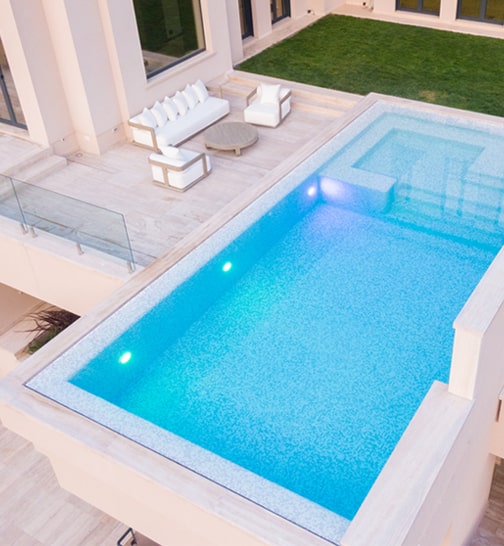
Thanks to intelligent pool technology and comprehensive automation, pool systems can now be operated more conveniently, safely, and efficiently than ever before.
The main features of a modern smart pool
Automatic water treatment
Continuous measurement of pH, redox/chlorine, temperature, flow rate, oxygen, or turbidity - including fully automatic dosing and disinfection.
Intelligent filter & pump control
Demand-based filter times, automatic backwashing, optimized pump speeds, automatic water level control.
App control & remote access
Control all functions centrally via smartphone, tablet, or PC. Fully integrated into smart home systems such as Loxone, or others.
Security & Monitoring
Real-time alerts for malfunctions, leaks, chemical shortages, or technical defects. Optional: camera integration, access monitoring, remote maintenance.
Energy-saving technology
Inverter heat pumps, demand-based pump output, intelligent cover control, LED lighting, and use of renewable energies.
Comfort functions
Control lighting, counter-current systems, waterfall showers, attractions, and covers - all at the touch of a button or automatically.
Challenges of conventional pools - and how smart pools solve them
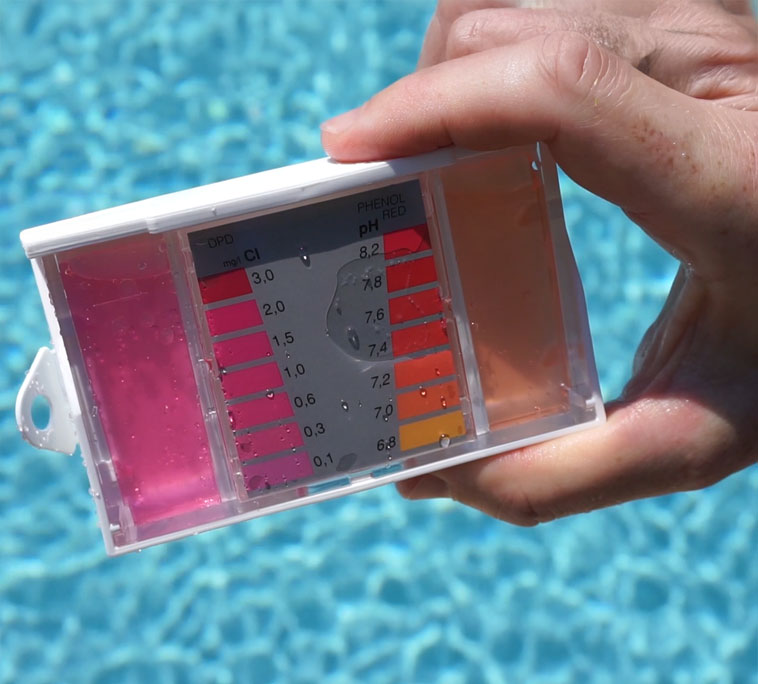
A modern smart pool takes almost all the worries off the owner's hands.
Challenges for pool owners
Many pool owners struggle with the same problems: water quality fluctuates, chemicals have to be dosed manually, technology fails unexpectedly, and inefficient pumps or heaters drive up operating costs. Added to this is the high cost of cleaning and maintenance, which frustrates many pool owners.
Consequences for pool builders
These problems often end up directly with the pool builders. Complaints, emergency call-outs, and recurring repairs take up time, increase liability risk, and have a negative impact on customer satisfaction and reputation.
How smart pools solve all these issues
This is exactly where smart pools come in:
- Sensors continuously monitor water and technology
- Automatic controls keep all values stable
- Intelligent controls significantly reduce energy and chemical consumption
- Early warnings prevent damage
- Processes run completely independently
Result
Pool owners enjoy reliable water quality with minimal effort - and pool builders benefit from more stable systems, fewer complaints, and more efficient service processes.
Advantages of smart pools over traditional pools
A smart pool offers advantages for everyone involved - technically, economically, and emotionally.
For pool owners
- Perfect water quality - automatically
- Minimal effort thanks to automatic maintenance, cleaning, and readjustment
- Early warning system for malfunctions and water deviations
- Significantly lower operating costs thanks to intelligent control logic
- More convenience & full control via app or smart home
- Less maintenance & longer service life for the technology
For pool builders
- Fewer complaints & more stable systems
- Remote diagnostics instead of emergency callouts
- Modular, clear system architecture - faster installation
- Predictable service processes and less stress
- Future-proof portfolio
- More satisfied customers = better reviews & more recommendations
Comparison table: Smart Pool vs. Conventional Pool
| Feature | Smart Pool | Conventional Pool |
|---|---|---|
| Water treatment | Automatic measurement and control technology, intelligent dosing | Manual measurement and chemical addition |
| Control | App/web, remote access, smart home integration | Manual switches, local operation |
| Energy efficiency | Demand-driven pumps, inverter heat pumps, LED | Standard operation, little optimization |
| Maintenance & monitoring | Sensors, warning messages, remote maintenance | Errors are detected late |
| Comfort functions | Central control of lighting, attractions, covers | Partially manual, often separate systems |
| Ease of use | Intuitive dashboards, real-time data | No overview, high susceptibility to errors |
Smart pool & demand-based control
What does demand-based control mean?
Each pool component is only activated when it is actually needed. This is based on real-time measurements such as water quality, temperature, usage situation, or weather conditions. The result is a pool that automatically recognizes what is necessary - and what is not.
Why is this important for smart pools?
In modern smart pools, demand-based control is a key principle. It ensures that the pool does not operate according to fixed, inefficient schedules, but responds flexibly and dynamically to current conditions:
- Speed and runtime control of the filter pump depending on water load and flow requirements (example: output is reduced during periods of low usage).
- Temperature control with target/actual comparison. Heating or cooling processes are only triggered when there are deviations from the target value.
- Sensor-based, closed control loops for the precise dosing of disinfectants and care products. Dosing is not done "by feel."
- Automated water level monitoring with targeted replenishment only when actually needed.
Optimized resource consumption & significantly lower operating costs
The biggest advantage: Demand-based control reduces resource consumption to a minimum. The automatic adjustment of all operating processes results in:
- Energy saved because pumps, heating, and lighting only run when actually needed
- Water consumption minimized, for example through demand-oriented backwashing or intelligent level control
- Chemicals are reduced thanks to precise, sensor-based dosing
- Service life is extended because components operate in optimal load ranges and are less frequently under full load, reducing mechanical wear
- Operating costs are measurably reduced because unnecessary component running times are avoided and energy and resource consumption is optimized
This makes the pool not only more efficient, but also more sustainable, durable, and significantly more economical.
More convenience for pool owners, less effort for pool builders
For private pool owners, this means that the pool automatically remains in optimal condition - without manual intervention, without hours of maintenance, and without unnecessary costs. The control system ensures consistently clear water quality, optimal temperatures, and transparent operating data that can be accessed at any time.
At the same time, there is a clear advantage for professional pool builders: stable, self-regulating systems reduce complaints, minimize service costs, and increase customer satisfaction in the long term. The demand-based control system thus contributes not only to technical efficiency but also to better business processes.
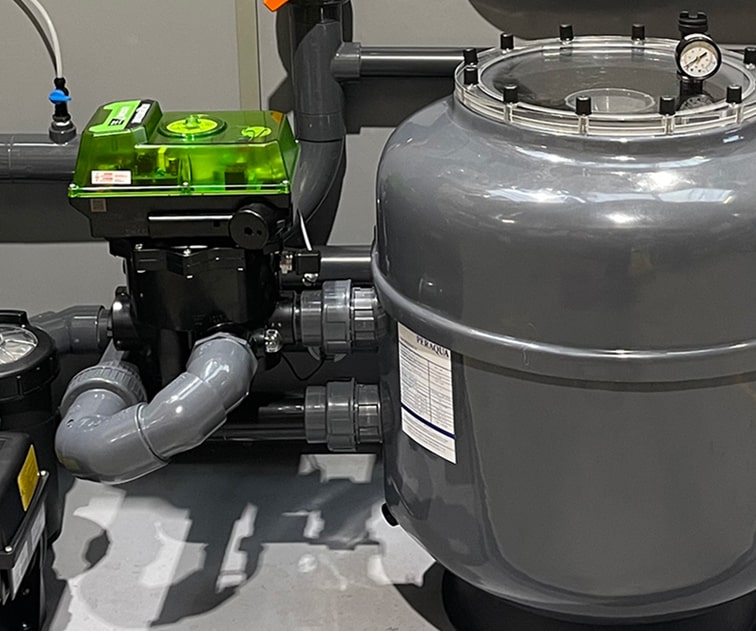
Smart pool components only run when they are actually needed .
Energy and resource savings of a smart pool
A modern smart pool significantly reduces energy, water, and chemical consumption:
- Up to 90 % less electricity consumption thanks to speed-controlled filter pumps.
- Up to 20 – 30 % lower heating costs thanks to inverter heat pumps, solar absorbers, and intelligent temperature control.
- Up to 30 % less chemical consumption thanks to precise dosing.
- Significantly reduced water consumption thanks to optimized backwashing processes.
- 80 % less electricity for lighting thanks to LED technology.
Total savings: By combining modern technologies, smart pools can significantly reduce energy consumption. The actual savings potential depends on usage, technical equipment, construction, geographical location, service life, and the use of a pool cover. Your specialist dealer can provide detailed calculations for your specific project.
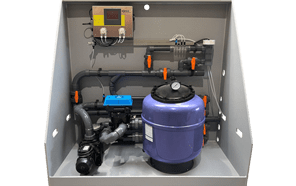
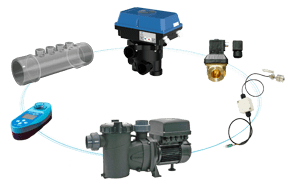
Smart pool and pool automation solutions from Peraqua

Ready
to take the first step?
Whether you dream of a private garden with a pool or are a professional looking for a reliable partner for your next project, we are here for you.
Simply fill out the form - no obligation. No flood of advertising, no constant phone calls. Just a quick connection to our customer service team, who will get back to you promptly.
Our goal: to understand your wishes, plan together, and provide you with a tailor-made offer.
Get started now – we look forward to your inquiry!
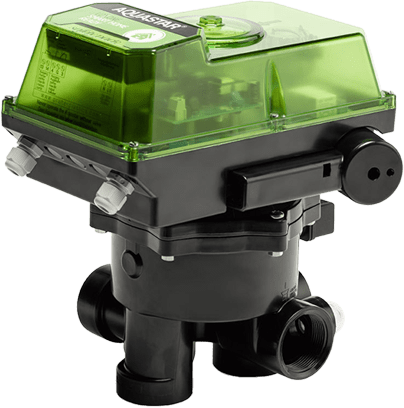

One Pool. One System. One Smart Home App.